How to Help Seniors Prepare for a More Comfortable Flight
Comfort on a long flight is planned before boarding. Knowing how to make a senior comfortable on a long flight starts with arranging airline assistance at least 48 hours before departure, choosing a seat that suits their mobility and bathroom needs, and keeping water and essential medication close at hand. A suitable flight plan can make each stage of the journey feel more manageable.
Even a senior who feels confident about flying can find long periods of sitting, busy airports, and disrupted routines tiring. Careful planning helps families address practical needs while supporting the traveler’s comfort and independence.
This guide explains how to request mobility assistance, consider aircraft access, select flights and seats, and support hydration on board. It also outlines when a senior may benefit from additional medical support during air travel, so you can plan the journey with greater clarity and confidence.
Table of Contents
1. Arranging mobility and medical assistance with the airline
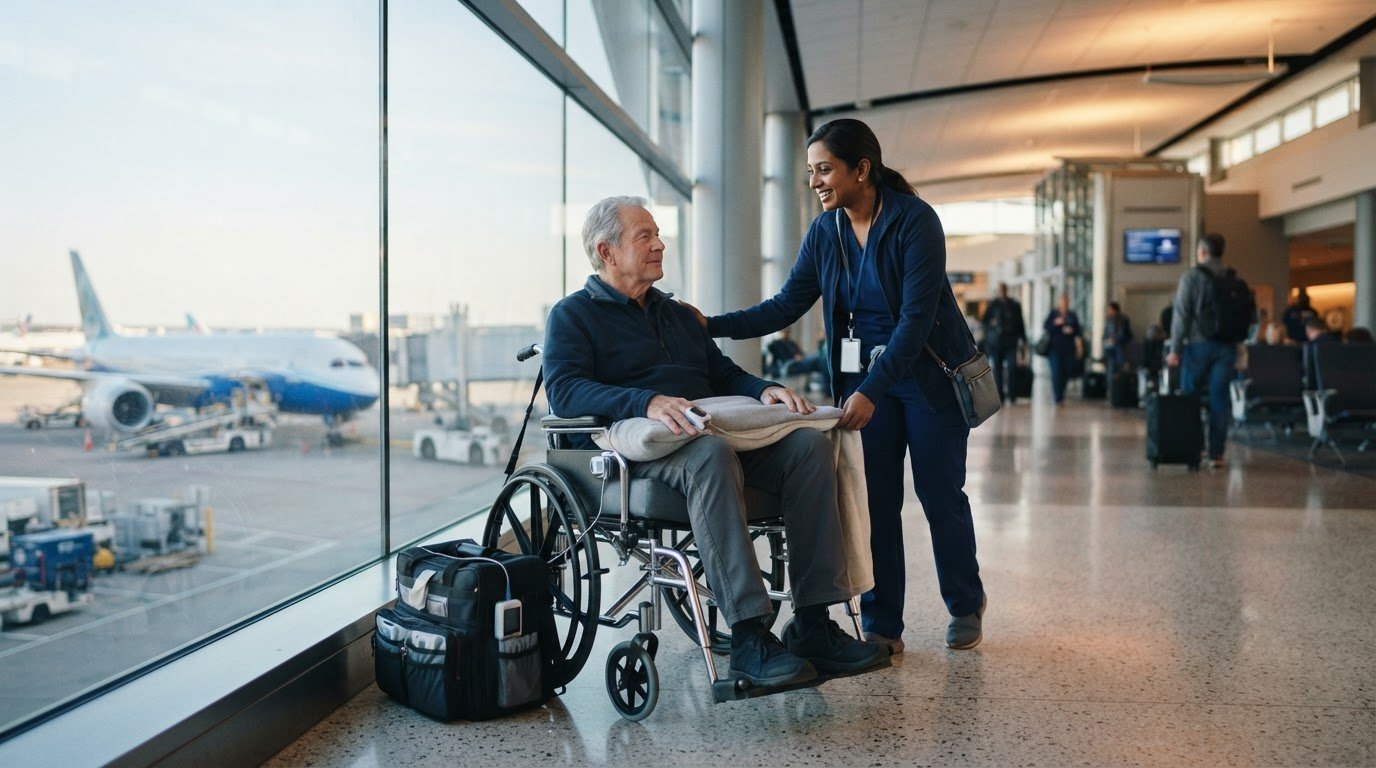
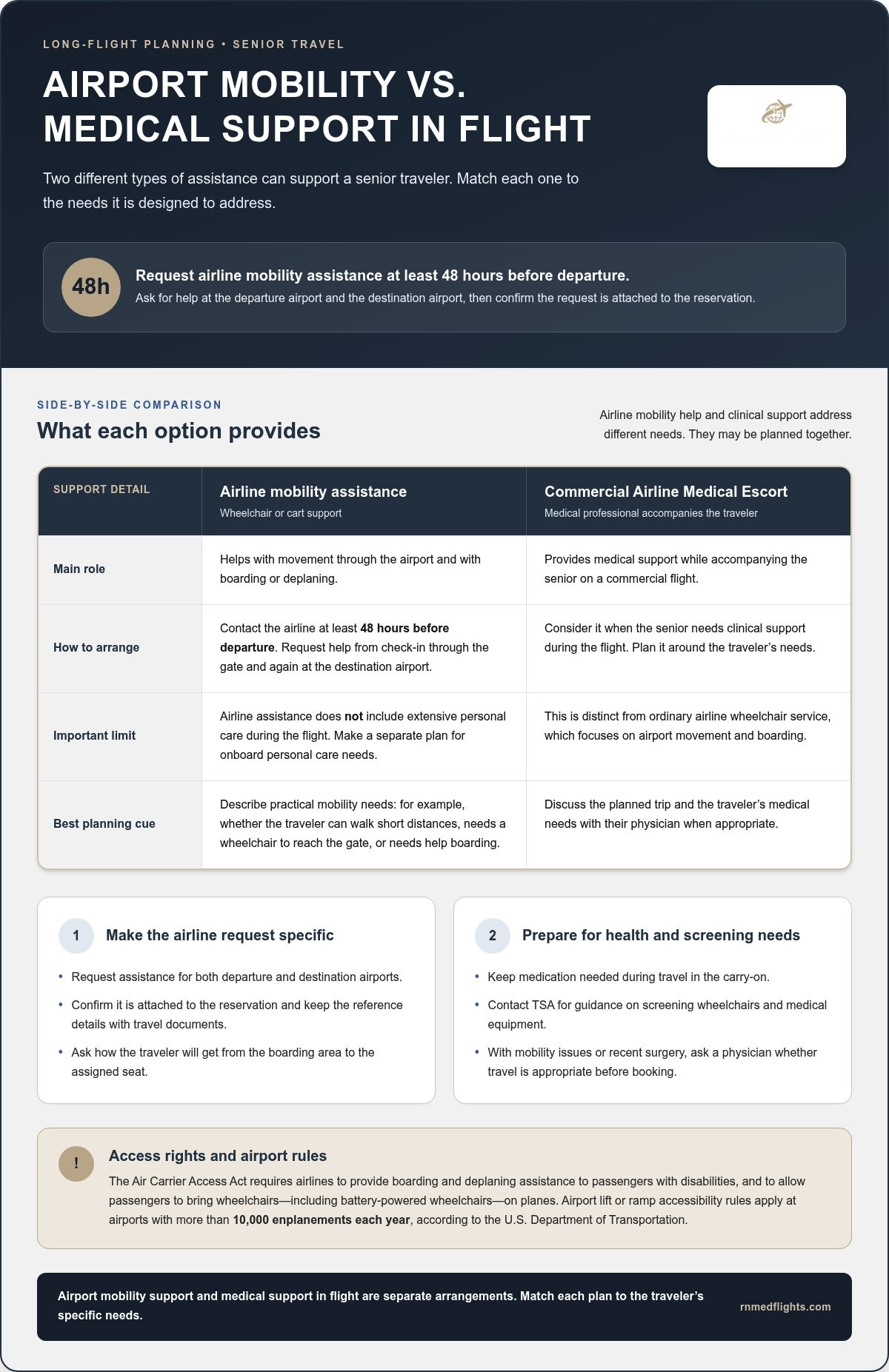
Contact the airline at least 48 hours before departure to request wheelchair or cart assistance. Ask for help from check-in through the gate, and request assistance again for the destination airport. Confirm the request is attached to the reservation, then keep its reference details with the travel documents.
The Air Carrier Access Act requires airlines to provide boarding and deplaning assistance to passengers with disabilities. Airlines must also allow passengers to bring wheelchairs, including battery-powered wheelchairs, on planes. Airport lift or ramp accessibility rules apply at airports with more than 10,000 enplanements each year, according to the U.S. Department of Transportation.
For a practical overview of common mistakes when preparing for a long flight, watch this video:
Describe the help the traveler needs in practical terms. Explain, for example, whether they can walk short distances, need a wheelchair to reach the gate, or require help boarding. Airline assistance can support movement through the airport and boarding, but it doesn’t cover extensive personal care during the flight. Make a separate plan for any personal care needs onboard.
What are the TSA rules for medications, medical devices, and mobility aids on flights? Keep medications needed during travel in the carry-on, and contact the Transportation Security Administration for guidance on screening wheelchairs and medical equipment. Tell security staff which items are essential medical devices so they can guide the screening process.
How can seniors prepare for a long flight with a doctor? Before booking, seniors with mobility issues or recent surgery should ask their physician whether they’re cleared to travel. Discuss the planned flight, mobility needs, medication routine, and any assistance needed during boarding or the journey.
What are the risks of flying with common age-related health conditions? A condition that affects walking, stamina, or personal care can make airport transfers and a long time onboard more demanding. Discuss the trip’s impact on those needs with the physician, then arrange airline assistance that matches the traveler’s mobility.
For a senior who needs clinical support during the flight, Commercial Airline Medical Escort provides a medical professional to accompany them on a commercial flight. This is distinct from ordinary airline mobility assistance: the escort provides medical support, while the airline’s wheelchair service helps with airport movement and boarding. Plan both arrangements around the traveler’s needs.
Ask the airline about wheelchair or cart assistance, and request that it be ready upon landing. Arrange support for the destination airport as well.
2. Carrying a refillable water bottle
A refillable water bottle keeps water within reach instead of making the traveler rely only on beverage service. Encourage the senior to hydrate before the flight and refill the bottle when water is available onboard. Service may not arrive when they want a drink, so keep the bottle accessible in an outer pocket, not under clothing or other packed items.
One long-haul flight tip suggests planning for about 4 ounces of water per hour of flight time. Treat that as a planning prompt, not a personal medical prescription. Seniors can drink regularly during the journey and avoid alcohol, or consume it very conservatively, since it can contribute to dehydration. A refillable bottle also makes it easier to notice whether they have been drinking throughout the flight.
Choose a carry-on the traveler can manage without straining. A compact bag with a comfortable strap and easy-to-reach compartments makes it simpler to get water, medication, or a snack while seated. Avoid overpacking, which can make lifting and finding items harder. Group frequently used essentials together and keep them within reach.
Put medication needed during the flight in the carry-on, not checked luggage.
Pack snacks and water so the senior isn’t relying only on airline food.
For a very long flight, include a change of clothes and toiletries.
Keep the bottle and essential medication in an easy-to-reach compartment.
Organize medication so the senior can identify and reach what they need. Keep it in its usual packaging and a consistent compartment. If several items are needed during the journey, arrange them before leaving home rather than sorting them in a crowded cabin. A simple packing routine also helps a travel companion find essentials quickly.
Choose familiar snacks the senior can eat comfortably during travel. Pack them in a separate pouch, away from toiletries, and keep napkins or wipes nearby. If the senior follows a prescribed eating or drinking plan, follow that guidance rather than treating general flight tips as medical instructions.
For travelers who need clinical support beyond help organizing essentials, a Commercial Airline Medical Escort can accompany them during a commercial flight. This may help families plan for medical needs alongside practical carry-on preparation.
Keep flight-time medication in an easy-to-manage carry-on, along with any medicine the senior may need during the journey. The author recommends drinking plenty of water on a plane and avoiding alcohol, which she finds dehydrating. For a very long flight, consider packing a change of clothes and toiletries in the carry-on so these essentials stay close at hand.
3. Planning ahead and checking aircraft accessibility
Plan the aircraft and seat together rather than choosing a flight by schedule alone. Before booking, explain the senior’s mobility needs to the airline and ask how they can get from the boarding area to their assigned seat. Consider whether they can manage the aisle and settle into the seat independently or need help. If a wheelchair is part of the plan, discuss how it will be handled at the airport and during boarding.
Choose a seat based on the traveler’s own priorities. A window seat can provide a place to lean while resting, while an aisle seat gives easier access for stretching and reaching the bathroom. If bathroom access is a concern, an aisle seat near a bathroom may help, even on a 90-minute flight. Consider the distance from the seat to the restroom and whether the senior can walk that route comfortably.
Noise-canceling headphones and an eye mask can reduce cabin distractions and make it easier to rest. Pack them where the senior can reach them after boarding. A neck cushion may also help them settle comfortably. If the senior wears glasses, bring them when possible, as dry cabin air can irritate eyes and contact lenses.
Plan sleep around the flight rather than relying on a new sleep aid onboard. Seniors considering medication for jet lag should try it before flying, not for the first time on the plane. Discuss a sleep aid with the prescribing clinician and follow their directions. A familiar routine, such as listening to an audiobook through headphones, can help create a quieter period for rest.
How can seniors manage sleep, hydration, and meals on a long flight? Keep water within reach, bring familiar snacks instead of relying only on airline meals, and use an eye mask or headphones to rest. Don’t try a sleep medication for the first time during the flight.
Make the reservation plan specific. Note the preferred seat, mobility assistance needs, and any difficulty reaching the bathroom. Keep these details with the itinerary so a travel companion can refer to them at check-in. If the airline changes the aircraft or seat assignment, revisit the plan to make sure the new arrangement still meets the senior’s access needs.
For example, a traveler who can walk short distances but needs a nearby restroom may prefer an aisle seat close to the bathroom. A senior who wants to lean while sleeping may prefer a window seat, provided bathroom access remains manageable. Match the seat to the traveler’s priorities to make the cabin plan practical.
4. Flight timing, direct flights, and seat selection
Compare total journey demands, not just the time spent in the air. A traveler’s 8-hour flight may form part of a 23-hour journey, while another itinerary could involve several planes and extended airport waits. Each connection adds another transition between seats, terminals, and boarding areas. When booking well ahead, prioritize nonstop flights when they suit the traveler’s needs. Fewer boardings and deplanings can make the itinerary simpler to manage.
Look closely at the full route before choosing a departure. One example describes a 32-hour hotel-to-hotel trip involving three airlines and four planes. A separate 16-hour flight was described as a physical endurance event. These examples show why the shortest individual flight isn’t always the easiest journey. Compare connection count, layover demands, and arrival timing together, then choose the itinerary the senior can manage most comfortably.
Choose a seat based on how the senior expects to spend the flight. An aisle seat makes it easier to stand and stretch, while a window seat offers a place to lean during sleep. If bathroom access is a concern, consider an aisle seat near one. Weigh mobility, preferred sleeping position, and ease of getting up before deciding.
Sitting in one seat for 5-13 hours can cause discomfort. Plan movement into the flight rather than waiting until stiffness develops. Set a timer to walk the airplane aisle every hour, if the senior can walk safely. One traveler described walking the aircraft’s length every 2 hours, but an hourly reminder gives the family a clear prompt to check movement needs.
How often should passengers move or do leg exercises during a long flight? Set a timer to walk the aisle every hour if the senior can do so safely. If walking isn’t practical, ask their clinician which seated movements suit their mobility and health needs.
Choose flight times that fit the senior’s usual routine. A departure that works with their normal sleep and meal schedule may be easier than one involving a long wait or an overnight connection. For a long layover, consider how they’ll reach a seat, restroom, and food during the stop. Include these transitions when comparing routes.
Before confirming the reservation, review the itinerary and seat together. A traveler who needs frequent bathroom access, for example, may value an aisle seat more than a window view. A senior who prioritizes sleep may prefer a window seat, provided it works for their mobility. This final comparison turns flight options into a practical comfort plan.
5. Staying hydrated during the flight
Plan water before boarding, rather than waiting until the senior feels thirsty. One long-haul flight tip suggests about 4 ounces of water per hour of flight time. Use this as a practical planning guide, not a personal medical prescription. A clinician’s fluid instructions take priority when the traveler follows a specific health plan.
Keep a refillable bottle in the seat pocket or another easy-to-reach place. A bottle left in the overhead bin won’t help the senior drink regularly. Refill it when water is available, since cabin beverage service may not come when they want a drink. If opening a bottle is difficult, choose one they can manage independently.
Cabin humidity often drops below 20% during long-haul flights. That dry environment can make the mouth, nose, and eyes feel uncomfortable. Take small drinks throughout the journey instead of relying on one large drink during beverage service. Keep tissues and any personal comfort items in the seat area, so the senior doesn’t need to search through a bag.
Be selective about alcohol. A long-flight tip is to avoid it or consume it very conservatively, since it can contribute to dehydration. Water is a better default during the flight. If the senior usually has a particular drink with meals, consider how it fits their routine and any instructions from their clinician.
Pair water with food the senior can eat comfortably. Airline meal times may not match their usual schedule, so pack familiar snacks as a backup. Keep snacks separate from the bottle to prevent spills, and choose food that’s easy to open and manage in a confined seat. A little preparation makes meals and drinks easier to access.
Fill the bottle when water is available, then return it to the seat pocket.
Take regular drinks instead of waiting for the next beverage service.
Keep familiar snacks within reach if airline meals don’t suit the senior’s routine.
Follow the clinician’s fluid guidance if the traveler has an individual plan.
Use a simple routine to keep water accessible throughout the flight. For example, have a drink with a snack, then leave the bottle visible afterward. A travel companion can help refill it when needed, while allowing the senior to manage the routine independently where possible. This supports hydration without relying on a single reminder or cabin service.
RN MEDflights: Commercial Airline Medical Escort
RN MEDflights provides Commercial Airline Medical Escort for seniors who need medical support while traveling on a commercial flight. It may suit a traveler whose care needs go beyond the mobility assistance offered by the airline. The escort accompanies the senior, helping families plan for continuity through airport procedures and the time onboard.
For journeys that also need coordinated ground arrangements, RN MEDflights provides Bed-to-Bed Medical Transport and Ground Ambulance Coordination. The plan depends on the senior’s mobility and medical support needs, as well as the route. These services don’t replace airline wheelchair assistance when the traveler only needs help moving through the airport.
Contact RN MEDflights to discuss support for a senior’s commercial flight.
Plan the Support Around the Traveler
The next step is to match the travel plan to the senior’s needs on departure day and throughout the journey. When considering how to make a senior comfortable on a long flight, look beyond seat choice and consider whether medical support is needed during travel. That distinction can help families decide what to arrange before finalizing the itinerary.
RN MEDflights provides Commercial Airline Medical Escort, Domestic Medical Relocation, and International Medical Repatriation. Each service supports a different travel situation, so the right next step depends on the journey and the support required. Share the travel plan and care needs with RN MEDflights to discuss which service fits.
Contact RN MEDflights for travel support to discuss the next step. With a plan shaped around the individual, families can approach the journey with greater clarity and help the senior travel with care and dignity.
Frequently Asked Questions
How can seniors prevent blood clots and stay comfortable during a long flight?
If the senior can move safely, set a timer to walk the aisle every hour. If walking is difficult, ask their clinician which seated movements suit their mobility and health needs. A travel companion can help maintain the routine and clear the aisle before the senior stands. Support hose may help with swelling, but personal medical guidance should determine their use.
What are the best seats and cabin options for seniors on long flights?
The best choice depends on how the senior plans to rest and move. To make a senior comfortable on a long flight, match the seat to those needs. An aisle seat can make standing easier, while a window seat offers a place to lean during sleep. Compare options based on the comfort and space they provide for the traveler.
What should seniors pack in a carry-on for comfort and medical needs?
Keep flight-time medication in the carry-on, with water and familiar snacks close at hand. When planning how to make a senior comfortable on a long flight, use a small pouch to separate essentials from toiletries and spare clothing. This makes items easier to find without unpacking the whole bag. Keep the carry-on manageable, especially if the senior will carry it through the airport.
How can caregivers help seniors with boarding, transfers, and in-flight needs?
Caregivers can arrange airline mobility assistance and stay with the senior during airport transitions. The Air Carrier Access Act requires airlines to provide boarding and deplaning assistance to passengers with disabilities. Before boarding, help the traveler organize items they’ll need at their seat. Airline assistance doesn’t include extensive personal services during the flight, so plan separately for any onboard personal care needs.