Affordable Airline Medical Transport for Neurological Care
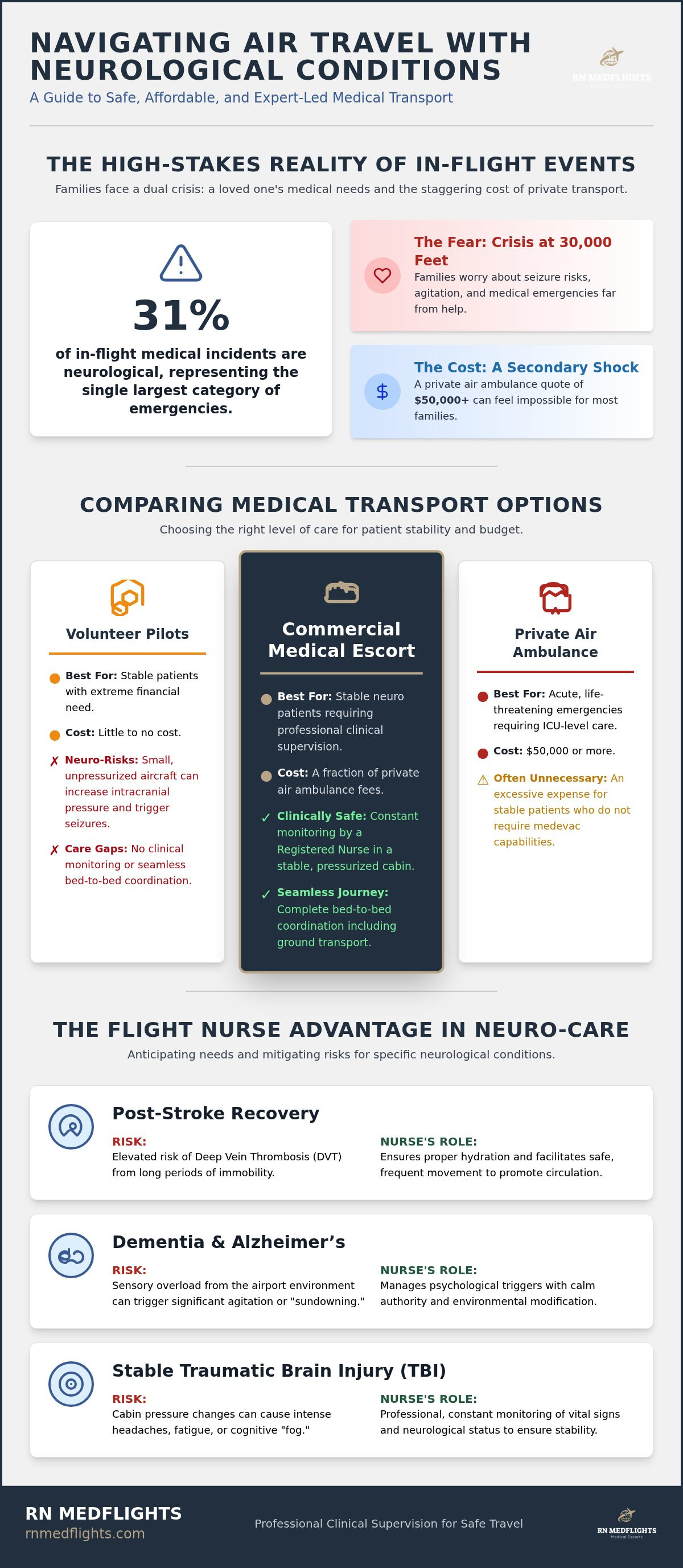
Did you know that neurological symptoms represent the single largest category of in-flight medical incidents, making up nearly 31% of all air-to-ground medical calls? For families managing a stroke recovery or a seizure disorder, this data confirms their greatest fear: a medical crisis at 30,000 feet. When you're searching for where to find affordable airline medical transport for neurological conditions, the initial shock of a $50,000 private air ambulance quote can feel like a secondary crisis. You know your loved one needs professional care, but the cost of a private jet feels impossible.
We understand the weight of this responsibility. You're balancing the need for clinical safety against a budget that doesn't include private aviation. It's a high-stress situation where the logistics of airline medical clearance and the potential for patient agitation during travel feel overwhelming.
This article explains how to secure safe, expert-led medical travel for neurological patients at a fraction of the cost of private air ambulances. We'll explore how commercial airline medical escorts provide a bridge between hospital beds, offering end-to-end clinical supervision by neuro-competent registered nurses. You'll learn how to navigate airline regulations and coordinate a seamless, bed-to-bed journey that prioritizes your loved one's stability.
Table of Contents
Understanding Neurological Medical Transport Needs
Neurological transport involves more than just booking a seat on a plane; it requires a deep understanding of how altitude and environment impact the human brain. For families navigating a stroke recovery or managing a loved one’s dementia, the logistics of travel often feel like an insurmountable risk. You might be looking for What is a Medical Escort? to understand how professional clinical support fits into a commercial flight setting. When considering where to find affordable airline medical transport for neurological conditions, the priority must remain on clinical oversight. An affordable option should never imply a lack of supervision, especially when dealing with fluctuating intracranial pressure or lowered seizure thresholds.
Common Neurological Conditions Requiring Escorts
Each neurological condition presents specific physiological challenges during flight. Our flight nurses are trained to anticipate these needs before they become emergencies. Consider these common scenarios:
Post-stroke recovery: Patients face an elevated risk of deep vein thrombosis (DVT) during long periods of immobility. A flight nurse ensures proper hydration and facilitates safe, frequent movement.
Dementia and Alzheimer’s: The airport environment is often a catalyst for sensory overload, which can trigger significant agitation or "sundowning." A professional escort manages these psychological triggers with calm authority and environmental modification.
Stable Traumatic Brain Injury (TBI): Even stable injuries remain sensitive to cabin pressure changes. These fluctuations can lead to intense headaches, increased fatigue, or cognitive "fog" that requires professional monitoring.
The Flight Nurse Advantage in Neuro-Care
The presence of a registered nurse transforms a stressful journey into a managed clinical event. Flight nurses don't just sit with the patient. They maintain a constant vigil, monitoring vital signs and neurological status to ensure the patient remains stable throughout the journey. This level of care is particularly vital for medication management. For patients on strict anti-seizure or sedative protocols, precise timing is mandatory to prevent breakthroughs or behavioral escalations. A neuro-competent escort serves as a professional safeguard, providing the clinical vigilance required to identify and mitigate neurological distress before it escalates into a mid-flight emergency.
By focusing on these clinical details, families can move away from the high costs of private jets while maintaining the highest standards of safety. It's about matching the patient's stability with the right level of professional supervision, ensuring that affordability doesn't come at the cost of clinical excellence.
Comparing Affordable Options: Volunteer Pilots vs. Commercial Escorts
When families research where to find affordable airline medical transport for neurological conditions, they often encounter two extremes. On one end are volunteer pilot organizations that offer flights at little to no cost; on the other are private air ambulances that can cost upwards of $50,000. Finding the middle ground requires a clear-eyed look at what a patient actually needs for safety and clinical stability. While private medevac jets are necessary for acute, life-threatening emergencies, they are often an unnecessary expense for stable patients who simply need a professional medical presence during relocation.
When to Choose a Volunteer Pilot Organization
Volunteer organizations are invaluable resources for stable patients facing extreme financial hardship who need to travel for specialized treatment. These non-profit groups typically operate small, piston-engine aircraft. However, these flights have significant limitations for neurological cases. Small aircraft are often unpressurized and subject to high levels of noise and vibration, which can trigger seizures or increase intracranial pressure in sensitive patients. Additionally, these services rarely provide bed-to-bed continuity. Families are often left to coordinate their own ground ambulance transfers and clinical monitoring, which can lead to dangerous gaps in care during the transition from hospital to hangar.
The Cost Efficiency of Commercial Airline Escorts
Commercial medical escorts represent the most effective balance of cost and clinical safety. By leveraging the existing infrastructure of major airlines, this model reduces transport overhead by 60-80% compared to private aviation. For patients who cannot sit upright, a commercial airline stretcher service provides a designated area on a standard flight equipped for continuous nursing care. This allows for a high level of clinical supervision without the massive fuel, crew, and landing fees associated with private jets.
It is important to remember that patients have specific legal protections under the Airline Passengers with Disabilities Bill of Rights. These rights ensure that airlines accommodate medical needs, though navigating the complex paperwork and medical clearance forms requires professional expertise. Our team handles these logistical hurdles to ensure the patient's dignity and safety are maintained throughout the process.
Total cost transparency is a hallmark of the commercial escort model. Families avoid the unpredictable surcharges of private flights while gaining the security of a neuro-competent registered nurse. If you are exploring these options for a loved one, you can request a detailed quote to see how this professional alternative fits your specific needs and budget. We provide a steady, organized presence that manages every detail from the initial clinical assessment to the final bedside handoff.
Why Commercial Airline Medical Escorts are Optimal for Neuro Patients
Large commercial aircraft offer a "Quiet Cabin" environment that functions as a mobile clinical space. Unlike small prop planes, these jets provide a stable, vibration-minimized platform crucial for maintaining neuro-stability. When you're searching for where to find affordable airline medical transport for neurological conditions, it's helpful to remember that commercial jets are engineered for the very comfort that neurological patients require. These larger vessels handle turbulence more effectively, which reduces the physical stress on a recovering brain.
Navigating the Medical Information Form (MEDIF) process is a critical safeguard in our planning. Our team manages this coordination directly with airline medical departments to ensure every clinical requirement is met before takeoff. This includes arranging specific seating logistics and confirming that the flight nurse has clearance to bring necessary clinical equipment, such as portable vitals monitors and neuro-specific emergency kits. We don't leave these details to chance; we verify every step to ensure the airline is fully prepared for our arrival.
The Importance of a Pressurized Environment
Commercial airliners maintain a sophisticated pressurized environment that small private prop planes cannot match. This stability is vital for managing intracranial pressure and preventing oxygen saturation drops that can exacerbate neurological symptoms. For post-surgical patients, a stable cabin altitude minimizes the risk of gas expansion. This is a physiological event that could lead to severe pain or neurological setbacks if an RN doesn't monitor the situation carefully. The consistent environment of a commercial cabin provides a predictable baseline for clinical observation.
Neuro-Specific In-Flight Protocols
Managing the psychological aspects of travel is just as important as physical vitals. Our flight nurses use specific tactics to reduce anxiety in dementia patients, particularly during the sensory-heavy TSA screening process. We implement strict seizure precaution protocols, utilizing noise-canceling headphones and precise hydration schedules to keep the patient calm. The natural integration of medical escort services ensures that even on long-haul flights, the patient remains in a controlled, therapeutic environment. This methodical approach allows us to maintain a steady pulse of care throughout the entire transit, prioritizing the patient's dignity and emotional security.
Managing the Logistics: Bed-to-Bed Neurological Relocation
Bed-to-bed transport isn't just a marketing phrase; it's a clinical protocol designed to eliminate dangerous gaps in care. When families ask where to find affordable airline medical transport for neurological conditions, they're looking for a managed process that protects a vulnerable patient from the moment they leave their current bedside until they're safely admitted to the next. This relocation process follows a methodical five-step path: clinical assessment, airline medical clearance, ground-to-air transition, continuous in-flight monitoring, and the final clinical handoff. By maintaining a single point of responsibility, we ensure that the patient's neurological status remains the primary focus throughout every transition.
Ground Ambulance Coordination
The "first and last mile" of any journey are often the most stressful phases for a patient with a traumatic brain injury or dementia. Multiple transfers between stretchers and vehicles can trigger significant agitation or physiological spikes. We coordinate with specialized non-emergency ambulance service providers who understand the importance of a low-stimulus environment. Our logistics team synchronizes these arrivals with flight schedules to minimize tarmac time. This precision prevents the patient from waiting in high-traffic areas, maintaining a calm and controlled atmosphere during the transition from the hospital to the aircraft cabin.
The Clinical Handoff Process
A successful relocation depends on the quality of information shared between medical teams. Our flight nurses use the Situation-Background-Assessment-Recommendation (SBAR) framework to provide a standardized, detailed report to the receiving facility. This ensures that critical details about neurological medications, recent seizure activity, or intracranial pressure trends are communicated clearly. Before the journey begins, we verify bed availability and admission status at the destination facility. We manage all physician-to-physician communication and medical record transfers, which reduces the cognitive load on families who are already experiencing significant stress. This continuity of care ensures that the receiving staff is fully prepared to continue the patient's treatment plan the moment we arrive.
By handling every logistical detail with clinical precision, we provide a steady presence that keeps the patient's safety and dignity at the forefront. If you're ready to discuss the specific needs of your loved one's relocation, speak with our clinical coordinators to receive a comprehensive transport plan. We are here to ensure that every step of the journey is managed by experts who prioritize patient stability above all else.
RN MEDflights: Professional Clinical Supervision for Safe Travel
RN MEDflights stands as the definitive answer for families searching for where to find affordable airline medical transport for neurological conditions without compromising on clinical excellence. We operate as a clinically-led organization, which means every decision is filtered through the lens of patient safety and neuro-stability. Our approach replaces the impersonal nature of logistics-heavy transport with a model centered on end-to-end responsibility. We don't just move patients; we provide a continuous umbrella of care that protects their dignity during what is often the most vulnerable journey of their lives. This commitment ensures that families have a steady, authoritative presence to rely on from the initial bedside assessment to the final hospital handoff.
Our domestic and international medical repatriation services are designed to be cost-effective alternatives to private aviation. By utilizing commercial airline infrastructure, we deliver the same level of professional nursing care found in private jets at a fraction of the cost. This makes high-quality neurological relocation accessible to more families during high-stress medical crises. We maintain a constant, unwavering presence throughout the journey, signaling to families that every detail is under the control of medical experts.
Our Flight Nurse Qualifications
The safety of a neurological patient depends entirely on the expertise of their escort. Every flight nurse at RN MEDflights possesses extensive critical care experience, ensuring they're prepared for the unique physiological challenges of aeromedical transport. These professionals are trained specifically in aeromedical physiology, which allows them to monitor subtle changes in neurological status that an untrained companion might miss. This specialized training is vital for managing patients with traumatic brain injuries or post-operative neurological conditions where cabin pressure and oxygen saturation must be managed with clinical precision. Our nurses combine the empathy of a caregiver with the methodical precision of a clinician, providing both emotional and physical security.
Securing Your Patient Relocation
Initiating a medical relocation is a methodical process designed to reduce the cognitive load on the family. It begins with a comprehensive clinical assessment where our medical directors review the patient’s current status and stability for flight. Once cleared, we develop a detailed flight plan that includes all ground ambulance coordination and airline medical clearance. For families requiring international medical repatriation services, we handle the complex layer of customs coordination and international health regulations. The result is a seamless journey that prioritizes clinical safety at every border. If you're ready to move forward, Contact RN MEDflights for a personalized neurological transport quote to begin the process of bringing your loved one home.
Securing a Safe Path Home
Moving a loved one with a neurological condition requires a balance of clinical vigilance and logistical expertise. You now understand that the high cost of a private jet isn't the only way to ensure safety. By utilizing commercial airline medical escorts, you gain access to a pressurized, stable cabin environment that is often superior for neuro-stability. Professional Registered Nurse oversight ensures that medication schedules and seizure protocols are managed with the precision your family deserves.
When you're determining where to find affordable airline medical transport for neurological conditions, the answer lies in a service that prioritizes continuity of care. RN MEDflights is a veteran-owned small business that provides Registered Nurse-led clinical care through every phase of the journey. Our global bed-to-bed coordination handles the complex ground ambulance transfers and airline medical clearances, so you don't have to navigate these hurdles alone. We manage the logistics so you can focus on your loved one’s recovery.
Take the next step toward a safe relocation today. Request a Transparent Quote for Neurological Medical Transport and let our clinical team guide you through the process. You can trust that your family is in capable, compassionate hands.
Frequently Asked Questions
Can a patient with dementia fly on a commercial airline?
Yes, patients with dementia can fly on commercial airlines as long as they are medically stable for travel. The primary challenge is managing sensory overload and potential agitation in the airport and cabin environment. Our registered flight nurses utilize specific environmental modifications and calming techniques to maintain the patient's dignity and comfort. We handle the logistical coordination and medical clearance to ensure the airline is prepared for the patient's unique needs.
How much does a commercial medical escort cost compared to an air ambulance?
Commercial medical escorts typically cost between 60% and 80% less than private air ambulance services. This significant cost reduction is possible because we utilize existing airline infrastructure rather than the massive overhead of a private jet. When you are researching where to find affordable airline medical transport for neurological conditions, this model provides the highest value. It allows for expert clinical supervision by a registered nurse without the prohibitive expense of private aviation fuel and crew.
Will insurance cover the cost of neurological medical transport?
Insurance coverage for non-emergency medical relocation is rare, as most providers categorize this as a lifestyle or convenience-based transfer rather than a medical necessity. However, we recommend checking with your specific insurance carrier or long-term care policy. While we don't handle insurance billing directly, we provide transparent, all-inclusive quotes to help families plan their budgets. Our focus remains on providing a cost-effective alternative to expensive private air ambulances for stable patients.
What medical equipment can a flight nurse bring on a commercial plane?
Our flight nurses carry a comprehensive array of portable clinical equipment tailored for neurological monitoring. This includes FAA-approved portable oxygen concentrators (POCs), pulse oximeters, and automated external defibrillators (AEDs). We also bring customized medical kits containing necessary medications and supplies for managing neurological stability. Every piece of equipment is cleared through the airline’s medical department during our coordination process to ensure compliance with current TSA and FAA regulations for 2026.
How do you handle medical emergencies during a commercial flight?
Our primary goal is prevention through proactive clinical monitoring and stabilization protocols. If a medical event occurs, our registered flight nurses are highly trained in aeromedical physiology and emergency response. They possess the clinical expertise to stabilize the patient using on-board equipment and medications. We maintain a constant vigil to identify subtle changes in neurological status, allowing us to intervene early and prevent a minor issue from escalating into a crisis.
What is "bed-to-bed" medical transport for neurological conditions?
Bed-to-bed medical transport is a comprehensive service that covers every phase of the relocation. We manage the initial bedside handoff at the origin facility, coordinate ground ambulance transfers, and supervise the entire flight. The process concludes only when the patient is safely admitted to their destination bed. This continuity of care is essential for neurological patients, as it minimizes the stress and physical strain associated with multiple handoffs between different medical teams.
How long does it take to arrange a neurological medical escort?
Most neurological medical escorts can be coordinated within three to five business days. This timeframe allows us to complete a thorough clinical assessment, secure airline medical clearance, and synchronize ground ambulance schedules. While some cases can be expedited, the complexity of neurological conditions requires a methodical approach to ensure every safety protocol is in place. We prioritize a safe, well-organized journey over a rushed one to protect the patient's stability.
Are flight nurses specifically trained for stroke or TBI patients?
Yes, our flight nurses come from intensive care or emergency backgrounds and receive specialized training in neurological care. They understand the specific risks associated with stroke recovery and traumatic brain injuries, such as fluctuating intracranial pressure and seizure activity. This expertise allows them to provide high-level clinical supervision during transit. Knowing where to find affordable airline medical transport for neurological conditions that includes this level of specialization provides families with essential peace of mind.


